About Me

My photo
Colombo, Sri Lanka
Professional Report/ Technical/ Blog/ Academic and Ghost Article Writer,Application Developer, Database Administrator, Content Creator and Project Manager in a wide variety of business & enterprise applications. Particularly interested in client/server and relational database design using MS-SQL Server & Oracle. Always interested in new hi-tech projects, as well as close interaction with the DB querying & reporting. Also a specialist in Education Management. Actively seeking the processes for merging Enterprise Lean Sigma (ELS) with IT.

Monday, 25 July 2011

6 Health Secrets from Around the Globe

From the Japanese to the Russians, the Greeks to the Kuna Indians of Panama, every culture has its own secrets to better health and longer life. These traditional remedies and practices—like drinking a calming herbal tea or cooking with a particular spice—might seem inconsequential, but researchers are discovering that these little things can make a world of difference. Try importing these six habits, all worth bringing home.

Panama
The Secret
Harvard professor Norman Hollenberg, MD, PhD, has spent years studying the Kuna, an indigenous tribe on the San Blas Islands who drink five cups or more of unprocessed cocoa a day. He discovered that compared with residents of mainland Panama, who generally drink nutrient-poor grocery store cocoa, the islanders' risk of cancer, diabetes, stroke, and heart disease is reduced to less than 10 percent. They can likely thank cocoa's flavonoids, powerful antioxidants with a host of cardiovascular benefits.
The PrescriptionFor a heart-healthy beverage, stir a touch of honey and a tablespoon of pure cocoa powder (flavonoids are often removed from processed powders) into a cup of warm milk.
Japan
The SecretThe Japanese live longer than almost anyone else on the planet—and this may be largely because their country has one of the lowest obesity rates in the world. One of their tricks for calorie control is a cultural practice known as hara hachi bu, which means eating until you feel about 80 percent full. At that point, your stomach is likely 100 percent full; your brain just doesn't know it yet.

The Prescription
Try to chew your food 20 times before you swallow. Slowing the pace of your eating makes it easier to recognize that 80 percent full feeling.
Russia
The Secret
Golden root, or Arctic root (a.k.a. Rhodiola rosea)—an herb that grows at high elevations in the harsh environs of the Arctic region—is a traditional Russian remedy used to treat ailments ranging from infections and altitude sickness to depression and nervous system disorders. The extremely resilient plant is known to be an adaptogen, meaning it helps the body adapt to stressors; scientific studies indicate that it can indeed boost endurance and mood while lessening stress and fatigue.

The Prescription:
Pick up the root at a natural foods store and use it to brew a cup of tea whenever you need to de-stress.
Netherlands
The Secret
The Dutch ride bicycles as a form of everyday transportation. Almost one-third of all trips are made on two wheels, and each citizen pedals an average of 1.5 miles per day. A 2010 statistical review of Dutch drivers found that they'd live up to 14 months longer by switching to cycling for short trips on a daily basis, thanks to the extra exercise.

The Prescription
Cycle to work a few times a week, run errands on your bike, or just go for a joy ride. We know that 30 minutes of this kind of moderate physical activity at least three times a week can slash your risk of heart disease, diabetes, and some cancers.
India
The Secret
A large percentage of Indian meals contain curry powder, and curry contains turmeric—a spice that has been used in Ayurvedic medicine for thousands of years. Now research shows that turmeric may help prevent Alzheimer's disease because of its antioxidant and anti-inflammatory action and immune-boosting properties—all of which may help to block or remove plaque from the brain. It's not surprising that one of the lowest rates of Alzheimer's ever reported was found in northern India.

The Prescription
Incorporate more vegetable and chicken curry dishes into your diet—at least one a week. And go heavy on the turmeric.
Greece
The Secret
A 2007 study of more than 23,000 Greek adults may have revealed a surprising key to their legendary vigor—the siesta. Compared with those who power through the day, adults who nap for a minimum of 30 minutes at least three times a week have a 37 percent lower risk of dying from heart disease.

The Prescription
If your work schedule doesn't allow you to pencil in a snooze, nap on weekends—every little bit helps.

Thursday, 21 July 2011

Top 10 iPad accessories

Apple's iPad is becoming a familiar feature of business life with organizations increasingly deciding to equip their staff with a tablet device. Always on hand to help, silicon.com's Shelley Portlet tracked down the 10 most useful iPad accessories for businesses to help users get the most out of the iPad.
First up is iPad Hut's 5-in-1 iPad Camera Connection Kit, which allows the iPad to connect with a range of different devices including digital cameras, TVs and monitors. The adaptor has five ports including a USB port, SD card port, microSD card port, 3.5mm DC port and mini USB port, as well as AV leads - allowing you to connect your tablet to other hardware or sideload documents and presentations from all those memory cards and USB sticks knocking around in your bag.


The Sir James iPad floor stand by Arktis can turn the iPad into a presentation aid for conferences and meetings.


The iPad wall mount by Vogel gives easy access to the tablet device with a click-and-release system that allows the iPad to be easily attached and removed.
iPad Hut's waterproof iPad case becomes 100 per cent waterproof when sealed, ideal for protecting the iPad from knocked over cups of coffee at heated board meetings - or pints during 'off-site meetings'.


While winter may seem but a distant memory, the recollection of icy fingers forced out of the warm to operate touchscreens still haunts us. Thankfully, the Isotoner SmarTouch Gloves pictured above have been designed to use on touchscreens so iPad-induced frostbite should become a thing of the past.


The HP Photosmart Wireless e-All-in-One Printer bypasses the need for the iPad to be connected to an office network in order to send documents for print - just email the documents to the printer's email address and wait for the printouts.


The least expensive iPad comes with just 16GB of storage so adding an external hard drive might be a good option. The Seagate GoFlex Satellite wireless external hard drive adds 500GB or storage space which Seagate says will hold up to 300 movies. It can stream to as many as three iPads at a time.
The Elgato Tivizen Mobile TV Tuner allows iPad users to watch TV on the go - handy for those who need to keep in touch with news and other programmes on the move or for making that commute slightly more bearable.


The Macally CARUSB10 2 Port USB Car Charger shown above plugs into a car's cigarette lighter jack and allows the iPad to be charged en route - useful for when your battery fails on the way to that all-important sales meeting.


The Eagle AppsKey Pro Foldable Wireless Shortcut Keyboard also allows you to dodge the tricky task of typing on glass, and its ability to fold in half makes it ideal for those who need a pocket-sized peripheral for use on the move.


And No. 11 as a bonus. Apple's iPad keyboard dock turns the iPad into a stand-in desktop as the full-size keyboard makes typing out long documents easier.

Wednesday, 20 July 2011

My favorite 7 questions

Great leaders seem to be able to get key information in a matter of seconds. But most can take hours to root out the same information — if they ever get it at all.

For those of you who can be lost for words when such opportunities arise, here are seven of my favorite questions for getting in touch with staff. Each one can provide more insight than a two-hour meeting with the entire team:


1. What’s the biggest issue on your plate right now? Most people will respond to this. Often it’s nothing more than a complaint or a status report, but it can lead to another question or two that will be enlightening.


2. If I could do just one thing to make you more successful, what would that be? This one often surfaces ongoing issues that are slowing progress. Usually a lower-level individual could resolve it, but that just hasn’t happened.
3. What’s the dumbest thing the company (or department) is doing (or working on)? Ask this question a few times to different people and you’ll soon find one or two things that should be put to death.


4. If you had my job, what would you focus on? Depending on the level of the person you ask, I assure you that you’ll hear some pretty interesting ideas that otherwise wouldn’t have surfaced. But “little” things can make a big difference to a group’s productivity and satisfaction.


5. What’s waking you up at night? This has two benefits: First it shows who is really thinking a lot about issues that need to be fixed. You should spend more time with them. Second, it can make it clear who treats the job as simply a paycheck. Do you really want them around?


6. Do you have the tools and resources you need to do your job in the best possible way? I’m always amazed at how a project can be stalled by something that is widely available elsewhere in the company.


7. How can I help you to be more successful? This is a great bonding question. If you really mean it and the team believes that to be the case; it can rally them. But don’t ask if you won’t deliver on their feedback.


Feedback is a big factor in the impact of the ongoing success of these hallway conversations. The best leaders get back to the individual who gave the ideas — if you can’t do it personally then send an email or make a call to show that you responded to their suggestion or comment.

Wednesday, 8 June 2011

Introducing the new Apple iCloud

Steve Jobs handled the iCloud announcement himself. iCloud is Apple's new cloud storage solution that handles everything from documents to media syncing.

iCloud will take over the syncing of mail, contacts, and calendars over multiple iOS devices.

Unlike MobileMe, iCloud will be free. 

Steve Jobs introducing the new iCloud icon, on the far right.

iCloud will offer wireless backup of all your phone's settings. This includes contacts, purchased music, apps, and books, camera roll, device settings, and app data.

iCloud offers 5GB of free storage for mail, documents, and backup. Purchased music, apps, and books don't count against the 5GB.

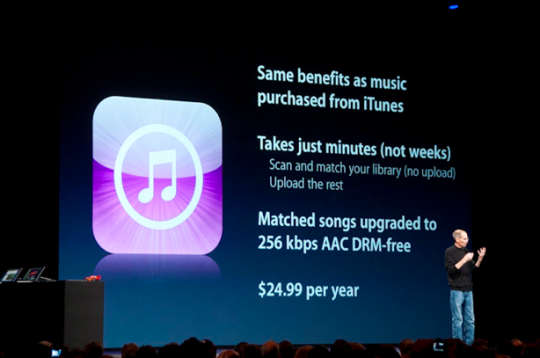
Steve Jobs introduces iTunes in the cloud, a service that lets you have access to all your iTunes music in the cloud on all iOS devices.

You can enable automatic downloads, that will automatically push new music to all your iOS devices once it's purchased.

iTunes Match will pair the songs up with the iTunes library, and upgrade them to 256kbps AAC DRM-free. However, iTunes Match will cost $24.99 a year.


Thursday, 5 May 2011

5 insanely cool robots

The SUGV (Small Unmanned Ground Vehicle) is a tactical mobile robot developed by 
iRobot and Boeing that gathers intelligence while humans are a safe distance away.

The 320SUGV at work.

The SeaGlider is a submarine robot that can work underwater for up to 7 months. It can be controlled from an iPad.

The SeaGlider measures temperatures, salinity, and other qualities of the ocean then uses 
a satellite phone to send in the data.

The configurable Warrior is basically a Lego Mindstorm for those with Bill Gates’s or Uncle Sam’s budget.

It can even be used as a plow. How would you like that for the winter in the north?

The PacBot has been around for a while - saving many lives in Iraq. It's thermal camera will provide images in complete darkness, smoke obscured areas and battlefields.

The 80-inch arm extender lets the operator examine potential dangers from a relatively safe distance.

The Negotiator is a smaller robot that can sneak into tight spaces.

Monitoring the progress of the Negotiator

Monday, 18 April 2011

Yuri Gagarin's historic space flight

On April 12, 1961, an almost unknown 27-year-old became the most famous man on the planet. Yuri Gagarin, in an 108-minute orbital flight aboard the Vostok 1, became the first human into space. Today is the 50th anniversary of Gagarin's flight, and though the Soviets were very quickly outclassed in the space race, that accomplishment a half-century ago is one that will live forever in the minds of most space enthusiasts.


Riding a converted ICBM, Gagarin lifted off in the cockpit of the Vostok 1. His flight lasted just 108 minutes, and it was only a month before the Americans' first manned space mission, but on April 12, 1961, no one was riding higher than Gagarin and the entire Soviet space program.


This reprint of "The Huntsville Times" heralds Gagarin's accomplishment.


The Vostok 1 capsule, which is said to have been difficult to get to separate 
from the final stage of its rocket, nearly causing catastrophe.


Each year, Gagarin is remembered with a series of special events held at locations the world over known as Yuri's Night.


In this photo from 1965, Gagarin is greeted warmly by members of the American 
Gemini 4 program at the Paris International Air Show.


Here, we see Gagarin in his spacesuit.


This is the control panel of the Vostok 1.


According to NASA, "Dr. George M. Low, acting administrator of NASA, presented to the USSR on January 21, 1971, a plaque in memory of Soviet Cosmonaut Yuri Gagarin who made the first flight into space on April 12, 1961. Accepting the plaque at the Moscow ceremony was Soviet Gen. Kuznetsov, commander of the USSR's Star City space base, where cosmonauts have been training since 1960."


Although Gagarin gets all the ink, much of the praise for the Soviet Union getting a man into space first should go to Sergei Korolev, the father of that country's space program.

Monday, 4 April 2011

2010 Smartphone Survey

Apple tops customer satisfaction; Motorola, HTC No. 2; RIM hits bottom


According to the smartphone customer satisfaction rankings, Apple remains top dog, but Motorola and HTC are nearly tied for the No. 2 spot. In other words, HTC and Motorola—two of the flagship Android brands—are improving. Here’s the scorecard:

A few items worth noting:
  • Motorola and HTC are equals in customer satisfaction, which may reflect more on Android commoditizing hardware.
  • Research in Motion is in trouble and at the bottom of the JD Power rankings.
  • Palm is in the middle of the pack and that may mean HP could get a smartphone foothold.
  • Samsung also rated near the bottom. That ranking is a bit surprising given the good reception for the Galaxy franchise.
  • J.D. Power said the ability to use social media on smartphones was a key factor in customer satisfaction. Smartphone users that used Twitter, LinkedIn and Facebook on their phones had satisfaction averages 22 points higher than folks that didn’t use their devices socially. 

LinkWithin

Related Posts Plugin for WordPress, Blogger...